SDC West African Maritime Strategic Retreat 2026
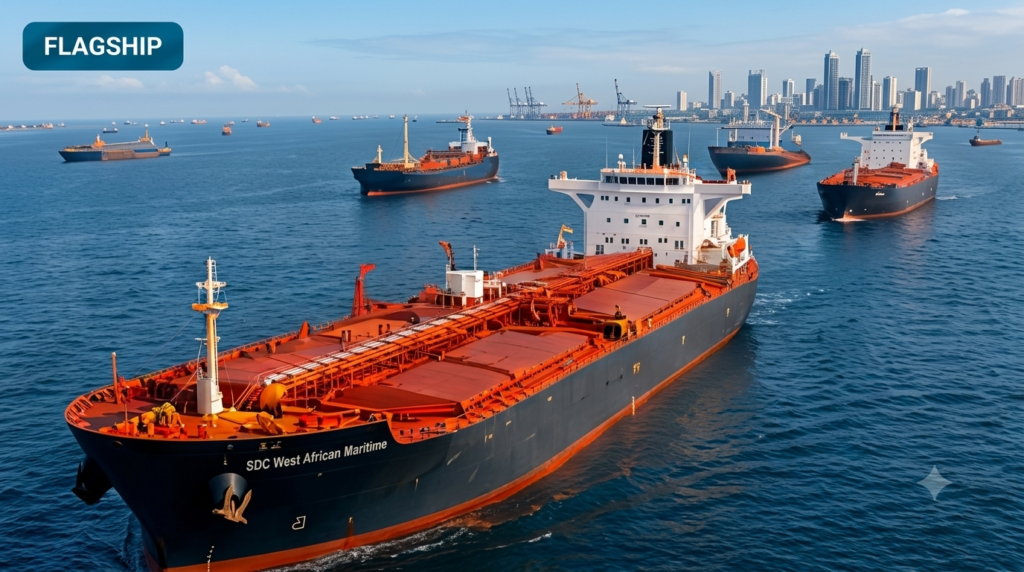
Our Programmes Connect. Collaborate. Create Impact. The Strategic Domains Council governments, organisations, institutions, professionals and development partners to engage with us across multiple pathways. Together we can strengthen governance, build capacity and deliver sustainable solutions for Africa’s strategic future SDC West African Maritime Strategic Retreat 2026 Governing the West African Maritime Domain: Integrating Interdependent Strategic Domains for Maritime Security, Safety, and Sustainability in the Gulf of GuineaThe Gulf of Guinea represents one of the world’s most critical yet geopolitically complex maritime domains. Accounting for a vast proportion of global crude oil exports, crucial commercial shipping lanes, and rich marine ecosystems, the region is vital to continental trade and international economic stability. However, the West African maritime space faces severe, interconnected security threats—ranging from piracy, armed robbery at sea, and crude oil theft to Illegal, Unreported, and Unregulated (IUU) fishing, narcotics trafficking, and marine environmental degradation. Overcoming these multi-faceted maritime challenges requires transitioning away from fragmented national defenses toward integrated regional governance, robust inter-agency execution, and continuous cross-border operational alignment.The SDC West African Maritime Strategic Retreat 2026 gathers senior naval commanders, maritime safety administrators, national defense strategists, judicial officers, and blue economy leaders across West and Central Africa. The retreat focuses on evaluating, modernizing, and operationalizing the regional maritime security architecture established under the Yaoundé Architecture. By breaking down operational silos between military forces, civil maritime regulators, and environmental custodians, the retreat aims to accelerate actionable policy solutions, optimize maritime domain awareness, and streamline judicial prosecution pathways for maritime crimes across the Gulf of Guinea.Key Deliberation PillarsInter-Agency Cohesion & Architecture Harmonized Command & Judicial Pipelines: Synchronizing joint operational command structures among naval forces, maritime police, coast guards, and judicial authorities to accelerate the arrest-to-prosecution pipeline for maritime criminals. Operationalizing the Yaoundé Architecture: Strengthening information sharing, joint patrol protocols, and operational readiness across Regional Maritime Security Centres (CRESMA/CRESMAC) and Inter-Regional Coordination Centres (ICC). Legal Framework Harmonization: Standardizing national maritime security legislation, piracy prosecution laws, and extradition treaties across Gulf of Guinea states in alignment with UNCLOS standards. Blue Economy Governance & Environmental Protection Combatting IUU Fishing: Deploying joint monitoring mechanisms, satellite tracking, and strict fishing vessel licensing protocols to eradicate illegal fishing and preserve coastal artisanal livelihoods. Marine Pollution & Environmental Safeguards: Formulating rapid response protocols for offshore oil spills, industrial waste dumping, and coastal environmental degradation to protect marine ecosystems and coastal biodiversity. Sustainable Maritime Trade & Resource Management: Balancing off-shore resource extraction with marine spatial planning (MSP) and sustainable blue economy investments that foster regional prosperity. Technology-Driven Maritime Domain Awareness (MDA) Integrated Surveillance Systems: Fusing data from satellite synthetic aperture radar (SAR), Automatic Identification Systems (AIS), coastal radar networks, and long-range identification tracking (LRIT). Unmanned & Autonomous Platform Deployment: Incorporating Unmanned Aerial Systems (UAS) and autonomous maritime vehicles to expand surveillance footprints over remote economic exclusion zones (EEZs). Real-Time Intelligence Sharing: Establishing encrypted, multi-agency data networks to instantly broadcast threat vectors and suspicious vessel profiles across regional maritime operations centers. Port State Control & Coastal Infrastructure Security Port Security Compliance & ISPS Code: Enforcing strict compliance with International Ship and Port Facility Security (ISPS) Code benchmarks across all West African commercial ports and offshore terminals. Critical Coastal Asset Protection: Securing offshore oil rigs, floating production storage units (FPSOs), subsea telecommunication cables, and strategic anchorage areas from asymmetric threats. Streamlined Port State Inspections: Enhancing joint customs and port authority inspection capacity to intercept illicit contraband, weapons trafficking, and unregistered vessels. Target Audience Naval & Defense Leadership: Chiefs of Naval Staff, Coast Guard Commanders, and Directors of Military Operations across West and Central African nations. Maritime Safety & Administration Officials: Directors-General and board executives of national maritime safety agencies and port state control administrators. Policy & Cabinet Ministers: Ministers of Defense, Transport, Foreign Affairs, Environment, and the Blue Economy. Port & Coastal Infrastructure Executives: Port authority managing directors, offshore terminal operators, subsea infrastructure managers, and maritime logistics leaders. Legal & Judicial Experts: Attorneys-General, maritime law drafters, prosecutors, and international law scholars specializing in law of the sea. International Security Partners: Representatives from international naval coalitions, UNODC, IMO, regional economic communities (ECOWAS/ECCAS), and maritime defense attachés.